

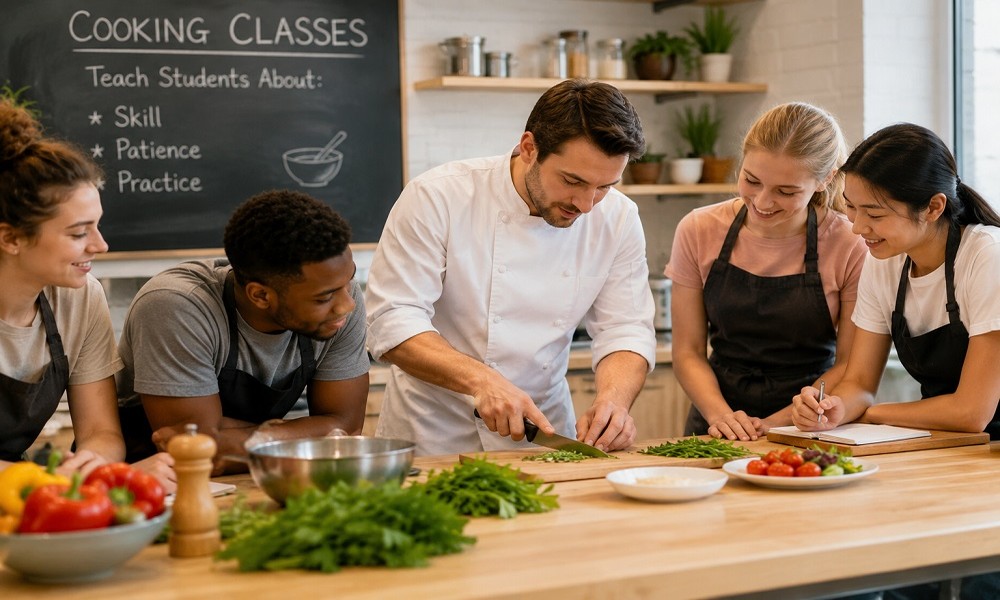
Food education is often treated as a hobby, but it teaches more than just recipes. A well-run cooking class builds planning, focus, timing, teamwork, safety awareness and confidence. Students can see the results of their decisions quickly, making the learning process direct and memorable.
Cooking also shows that skill is built through repetition. You can read about heat control, but you understand it better when onions burn, dough fails to rise, or meat dries out because it was rushed. That feedback is practical, immediate and hard to ignore.
Why Practical Learning Works
Not every student learns best from listening. Some need to handle tools, test ideas and make mistakes in a controlled setting. Cooking gives them that chance. It turns abstract lessons into real tasks with visible outcomes.
A course such as corso bbq can fit into education when it is treated as structured skill training rather than casual grilling. Students learn about heat zones, food safety, preparation, timing and how different ingredients respond to smoke, flame and rest time.
The Hidden Curriculum of Cooking
Every class teaches the stated lesson, but practical subjects also teach habits. Students learn to clean as they go, check instructions, respect shared equipment and recover from mistakes. These habits transfer into work, study and daily life.
A student who learns to prep ingredients before turning on the heat is learning sequencing. A student who waits for dough to rest is learning patience. A student who seasons carefully, tastes and adjusts is learning evaluation rather than guesswork.
Mistakes Are Useful When the Setting Is Safe
Cooking classes are good places for controlled mistakes. A sauce splitting, bread underbaking or vegetables overcooking can become a better lesson than a perfect demonstration. The teacher’s role is to slow the moment down and ask what happened.
Useful questions include:
- Was the pan too hot?
- Were the ingredients measured accurately?
- Did the student read the full method first?
- Was there enough time?
- What would they change next time?
That style of questioning teaches problem-solving. It also reduces fear of failure because mistakes become information rather than embarrassment.
Food Safety Builds Responsibility
Food education also introduces responsibility. Students need to understand handwashing, storage, cooking temperatures, allergens and cross-contact. These lessons matter whether they become chefs or simply cook at home.
Food safety is not glamorous, but it is one of the most useful parts of practical learning. It teaches students that care and process protect other people. That is a serious lesson for young learners and adults alike.
Why BBQ Skills Are More Educational Than They Look
Barbecue cooking is especially useful for teaching patience and control. Unlike boiling pasta or frying an egg, live-fire cooking makes students think about direct heat, indirect heat, airflow, fuel, timing and resting. It rewards observation.
Students quickly learn that more heat is not always better. A steady temperature often produces better results than rushing. That lesson applies beyond cooking. Many skills improve when you stop forcing speed and start managing the process.
Assessment Can Be Practical Too
Cooking education does not need to be assessed only by taste. A teacher can review preparation, hygiene, teamwork, timing, tool use, communication and reflection. This is fairer because students may produce different dishes while still showing strong learning.
A simple assessment grid could include:
This helps students see that the finished plate is only one part of the learning.
Building Confidence Through Useful Skills
One reason cooking classes work well is that students leave with something they can use. They can cook a meal, understand ingredients better and feel more capable at home. That kind of confidence is different from passing a quiz. It changes what a person feels able to do.
The best food education does not talk down to learners. It gives them real tools, real tasks and real responsibility. Whether the class is about baking, knife skills, nutrition or outdoor cooking, the deeper lesson is the same: prepare properly, pay attention, adapt when needed and keep practising.