

Obtaining a degree can wind up costing many thousands of dollars, even after factoring in grants and scholarships, which is why some students are paying to attend college. Private student loans, on the other hand, can help fill the gap to cover tuition, housing, books, and other approved education-related expenses that aren’t covered by other funding sources. But your lender can influence your interest rate, monthly payments, and total debt.
Before you apply, do compare 2-3 lenders by the full cost of borrowing and be warned with sounding judgmental about values not reflected in cheap consumer products.
What Factors to Consider When Choosing a Lender?
Lenders have different rates, repayment terms, and eligibility rules. Some will need a cosigner or will limit to students with scarcely any credit history.
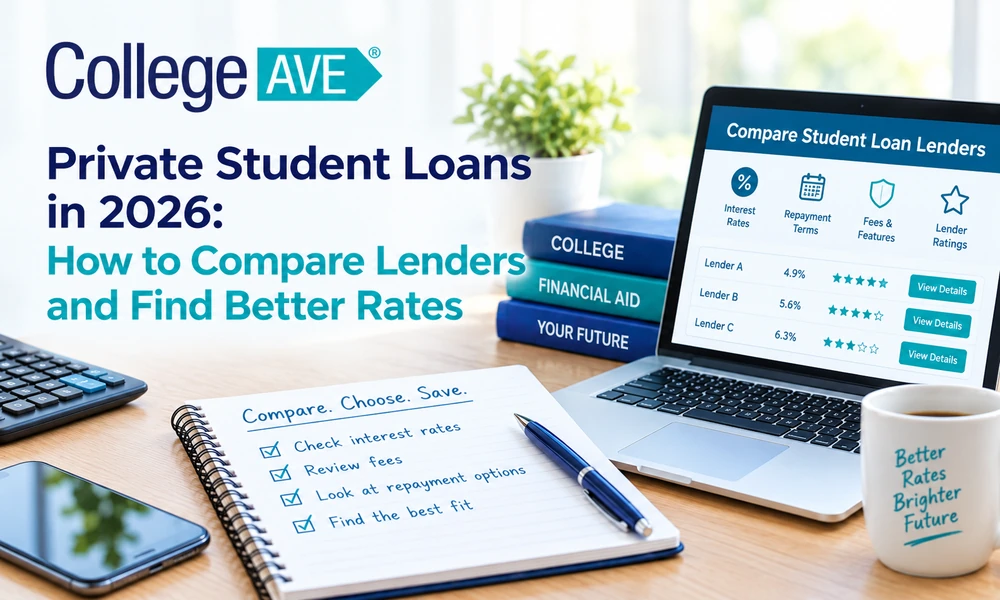
One way you can look at the best private student loan lenders of 2026 is to compare these features instead of checking out rankings.
- Interest rate: To verify if it is fixed or variable
- Loan fees: Examine all charges that raise the cost of borrowing money
- Look at repayment terms: Look for monthly payments and total repayment time period
- Cosigners: Find out if a cosigner is required and how to remove that person later
- Support: What help is available if you are unable to pay
A poorly advertised rate could require a subprime credit or a simple co-signer. Your actual offer may differ.
Compare Offers Before You Apply
More specifically, the way to do this is start by determining how much your college will cost going forward. Take away grants, scholarships, your personal savings, and other support. Only borrow as much as you need to fill the remainder.
Before seeking private financing, students in the United States should exhaust federal student aid. Compared to private loans, federal loans may have repayment plans and borrower protections that are not available with a private loan.
After that you need to ask for estimates from various lenders. Compare the annual percentage rate, payment period, and estimated full expense. While a longer term means your monthly bill is lower, you will be paying more interest over the life of the loan.
Prepare Your Application
Review your credit report and find all the necessary financial documents. Talking to someone about cosigning should be done carefully if that is necessary prior to applying. If you default, the cosigner will be liable for repayment.
Read the loan agreement carefully. Find out your interest start date, when installments are due, and what happens if you miss one.
Choose an Affordably Priced Option
Private student loans can fill a college funding gap, but payback can linger for years after graduation. Anticipate the future income and select the terms that are workable for you.
Compare lenders carefully, go through every fee you could find, and borrow only what you need. That can keep future costs manageable but a clearly defined plan could help you finance your education.