

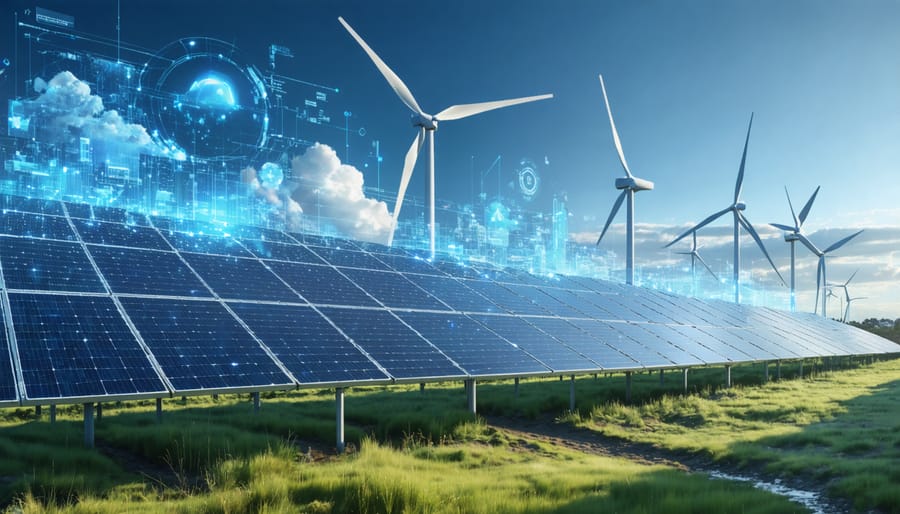
Marathahalli, a bustling tech hub in Bangalore, is increasingly becoming a hotspot for innovation in artificial intelligence and sustainable technologies. As India aims to expand its renewable energy capacity to meet environmental commitments and reduce reliance on fossil fuels, integrating AI into the energy sector has become a game-changer. One of the most promising applications of AI is in renewable energy forecasting and grid optimisation, enabling energy providers to predict energy generation and consumption patterns with greater precision.
Artificial intelligence is proving indispensable with the growing complexity of modern power grids and the intermittent nature of renewable energy sources like solar and wind. Enrolling in an artificial intelligence course can provide aspiring professionals in Marathahalli with the technical skills to develop and deploy AI models that transform the energy sector.
The Challenge of Renewable Energy Forecasting
Unlike traditional power plants, renewable sources are heavily influenced by environmental variables. Cloud cover, wind speed, temperature, and humidity can significantly alter energy output. This unpredictability makes it difficult for grid operators to maintain stability and ensure a steady electricity supply.
For instance, a sudden drop in wind speed can reduce energy generation from wind turbines, requiring backup sources to come online quickly. This can result in energy imbalances, blackouts, or wasted energy without accurate forecasting tools. That’s where AI steps in.
How AI Enhances Energy Forecasting?
AI algorithms can process vast volumes of historical and real-time weather data, learn patterns, and predict renewable energy output accurately. Here are some key ways AI improves forecasting:
- Machine Learning for Weather Prediction
Machine learning models can be trained on temperature, wind, solar irradiance, and satellite imagery datasets. These models generate more granular and accurate forecasts than traditional statistical methods. For example, convolutional neural networks (CNNs) are used to analyse cloud movement and predict solar energy output.
- Time Series Analysis
AI-based time series analysis can forecast short-term and long-term trends in energy production. Recurrent neural networks (RNNs), especially LSTM (Long Short-Term Memory) networks, are ideal for this task as they can retain memory over long data sequences.
- Anomaly Detection
AI can detect anomalies in energy generation patterns, allowing grid operators to manage fluctuations proactively. This helps minimise disruptions and optimise energy storage and dispatch strategies.
Grid Optimisation: Managing Supply and Demand with AI
Beyond forecasting, AI is pivotal in optimising the electric grid, especially when balancing supply and demand in real-time.
- Smart Grid Management
AI integrates with smart meters, IoT sensors, and energy management systems to analyze real-time data. It enables dynamic load balancing, identifying which areas need more power and adjusting distribution accordingly. This reduces transmission losses and ensures energy reaches where it’s needed most.
- Energy Storage Optimisation
Battery storage is essential for handling surplus energy generated during peak hours. AI algorithms determine the best times to charge and discharge batteries based on demand forecasts and electricity prices, maximizing efficiency and cost savings.
- Predictive Maintenance
AI-driven predictive maintenance helps detect wear and tear in grid components and renewable installations. This reduces downtime and extends the life of infrastructure, such as turbines and solar panels.
Use Cases Around the Globe
Many countries are already witnessing the transformative impact of AI in renewable energy:
- Germany’s Energy Transition (Energiewende): German utility companies use AI to accurately forecast solar and wind energy production, ensuring stable grid operation even with high renewable penetration.
- Google’s DeepMind in the U.S.: DeepMind applied AI to Google’s wind farms in the U.S., increasing value by 20% through better energy prediction and delivery schedule.
- India’s Renewable Expansion: Companies in Bangalore and nearby regions are adopting AI models to forecast solar output in areas like Rajasthan and Tamil Nadu, where sunlight variability is a significant challenge.
These examples underline how AI-driven energy models are not just theoretical but already delivering real value.
Why Marathahalli Is an Ideal Hub for AI-Energy Innovations
Marathahalli is home to many tech startups, engineering colleges, and R&D labs. It is also near Electronic City and Whitefield, two major tech corridors. The presence of skilled professionals and a culture of innovation makes this area ideal for developing and testing new AI applications in renewable energy.
Moreover, local initiatives in innovative city projects and sustainable energy adoption make Marathahalli a live testbed for innovative grid technologies. Energy startups here can benefit from government support, corporate partnerships, and a young, tech-savvy talent pool eager to learn through platforms like an artificial intelligence course tailored for the energy sector.
The Role of Education and Upskilling
Professionals aiming to work at the intersection of AI and renewable energy must be proficient in data science, machine learning, and energy systems. A well-structured AI course in Bangalore can bridge the gap by offering domain-specific modules that blend AI techniques with energy management practices.
Courses that include case studies, real-world datasets, and simulation tools can help learners design models for forecasting wind energy output, optimize grid load, or build AI-powered dashboards for energy monitoring. Upskilling is not just crucial for job seekers—energy professionals must stay ahead of the technological curve.
Conclusion
AI is revolutionizing how we generate, predict, and distribute renewable energy. From improving solar output predictions to automating grid operations, AI offers a more resilient and sustainable future for the energy sector. Marathahalli, with its ecosystem of innovation and education, is poised to lead this green transformation.
For professionals and students alike, pursuing this course opens the door to one of the most impactful applications of technology today. With opportunities from startups to global energy giants, the need for AI experts in clean energy is only set to grow.
If you’re in Bangalore and passionate about technology and sustainability, enrolling in an AI course could be your first step toward shaping the future of energy. The synergy between artificial intelligence and renewable energy is no longer a possibility—it’s a present-day reality that’s driving global change.
For more details visit us:
Name: ExcelR – Data Science, Generative AI, Artificial Intelligence Course in Bangalore
Address: Unit No. T-2 4th Floor, Raja Ikon Sy, No.89/1 Munnekolala, Village, Marathahalli – Sarjapur Outer Ring Rd, above Yes Bank, Marathahalli, Bengaluru, Karnataka 560037
Phone: 087929 28623
Email: enquiry@excelr.com